
Wiener Musikverein tickets 5 March 2027 - Tonkünstler-Orchestra Lower Austria Tchaikovsky • Smetana • Janáček Christian Arming • Simone Lamsma | GoComGo.com

Tonkünstler-Orchestra Lower Austria Tchaikovsky • Smetana • Janáček Christian Arming • Simone Lamsma

Wiener Musikverein, Großer Saal, Vienna, Austria
All photos (1)
Select date and time
7:30 PM
From
US$ 104

E-tickets: Print at home or at the box office of the event if so specified. You will find more information in your booking confirmation email.

You can only select the category, and not the exact seats.
If you order 2 or 3 tickets: your seats will be next to each other.
If you order 4 or more tickets: your seats will be next to each other, or, if this is not possible, we will provide a combination of groups of seats (at least in pairs, for example 2+2 or 2+3).

Important Info
Type: Classical Concert
City: Vienna, Austria
Starts at: 19:30
Duration: 2h

E-tickets: Print at home or at the box office of the event if so specified. You will find more information in your booking confirmation email.

You can only select the category, and not the exact seats.
If you order 2 or 3 tickets: your seats will be next to each other.
If you order 4 or more tickets: your seats will be next to each other, or, if this is not possible, we will provide a combination of groups of seats (at least in pairs, for example 2+2 or 2+3).

Cast
Performers
Violin: Simone Lamsma
Conductor: Christian Arming
Choir: The National Theatre Chorus
Orchestra: The National Theatre Orchestra
Orchestra: Tonkunstler Orchestra
Creators
Composer: Pyotr Tchaikovsky
Composer: Leoš Janáček
Composer: Zdeněk Fibich
Librettist: Anežka Schulzová
Director: Kay Link
Programme
Pyotr Tchaikovsky: Concerto for Violin and Orchestra in D major, op. 35
Zdeněk Fibich: Šárka
Leoš Janáček: Taras Bulba, Rhapsody for Orchestra
Overview

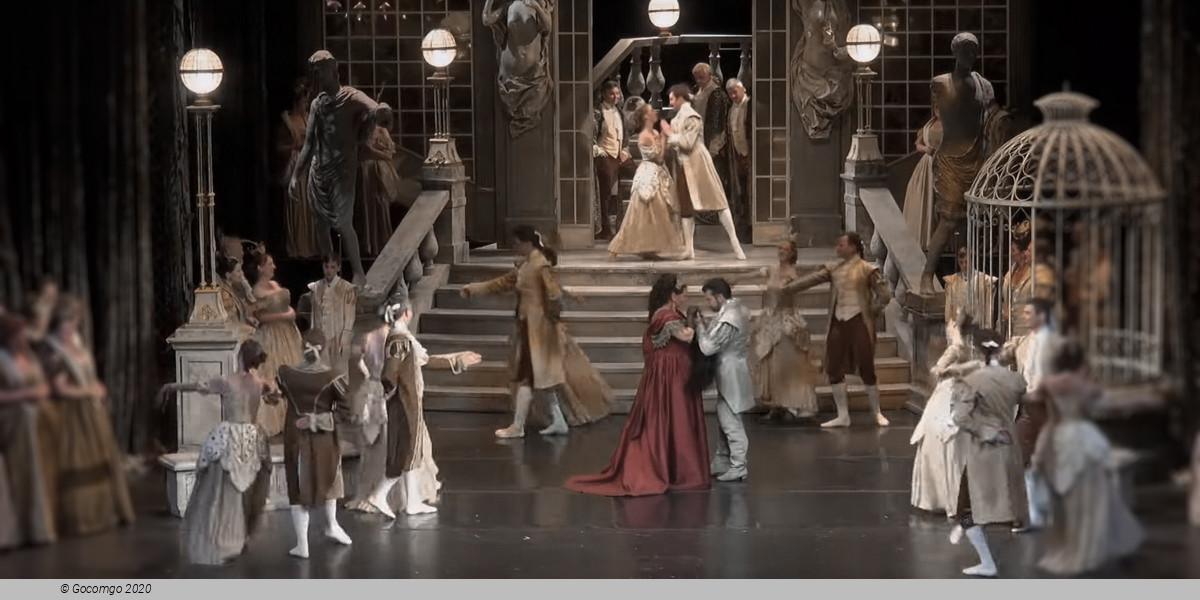
The story of Zdeněk Fibich’s Šárka loosely links up to Bedřich Smetana’s festive opera Libuše. It depicts the Maidens’ War, an uprising that broke out after the death of the mythical Princess Libuše, with the women striving to regain the privileges they enjoyed during her reign.

The legend can be found in a variety of literary sources, from Cosmas of Prague’s 12th–century Chronica Boemorum to Alois Jirásek’s ever-popular Old Czech Legends, first published in 1894. During the 19th-century National Revival, Bohemian mythology inspired a number of artists, influenced in part by the fake Manuscript of Dvůr Králové and Manuscript of Zelená Hora, motifs of which even appear in the decorations of Prague’s National Theatre. Besides Libuše and Šárka, the legend of the women’s uprising reflects in Smetana’s cycle My Country (the tone poems Vyšehrad and Šárka), as well as in Otakar Ostrčil’s opera The Death of Vlasta. Fibich evidently closely worked on Šárka with the librettist Anežka Schulzová, a pupil of the prominent Czech author Jaroslav Vrchlický, with their amorous relationship having had a positive impact on their endeavours. The opera premiered on 28 December 1897 at the National Theatre in Prague, conducted by Adolf Čech. The production, directed by Adolf Krössing, featured scenery by Robert Holzer and Mikoláš Aleš, with the latter’s visual style becoming a traditional model for the costumes in the majority of the adaptations that followed. The first to portray Šárka was the outstanding 28-year-old soprano Růžena Maturová (also the first to perform Antonín Dvořák’s Rusalka).

This new production will be presented more than four decades after the most recent performance of Šárka at the National Theatre. It will be conducted by Robert Jindra, music director of the National Theatre Opera, who has invited the German stage director Kay Link.

History
Premiere of this production: 28 December 1897, National Theatre, Prague

Šárka is an opera in three acts by Zdeněk Fibich to a Czech libretto by Anežka Schulzová, his student and lover. Fibich composed the full score over the period of 8 September 1896 to 10 March 1897. The subject matter, the Bohemian legend of Šárka, which appears in 14th-century Czech literature, is related to that of Smetana's tone poem Má vlast and the opera of the same name by Janáček. Schulzová used as her primary literary source an 1880 version of the story by J. Vrchlický.

Venue Info

Wiener Musikverein - Vienna
Location   Musikvereinsplatz 1

The Wiener Musikverein is a concert hall in the Innere Stadt borough of Vienna, Austria. It is the home of the Vienna Philharmonic. The acoustics of the "Great Hall" (Großer Saal) have earned it recognition alongside concert halls including Berlin's Konzerthaus, the Concertgebouw in Amsterdam, and Boston's Symphony Hall.

The building is located on Dumbastraße / Bösendorferstraße behind the Hotel Imperial near the Vienna Ring Road and the Wien River, between Bösendorfer street and Charles' Square. However, since Bösendorfer street is a relatively small street, the building is better known as being between Charles' Square and Kärntner Ring (part of Vienna Ring Road). It was erected as the new concert hall run by the Society of Friends of Music in Vienna, on a piece of land provided by Emperor Franz Joseph I of Austria in 1863.

The plans were designed by Danish architect Theophil Hansen in the Neoclassical style of an ancient Greek temple, including a concert hall and a smaller chamber music hall. The building was inaugurated on 6 January 1870. A major donor was Nikolaus Dumba, industrialist and liberal politician of Greek descent, whose name the Austrian government gave to one of the streets surrounding the Musikverein.

The Great Hall's lively acoustics are primarily based on Hansen's intuition, as he could not rely on any studies on architectural acoustics. The room's rectangular shape and proportions, its boxes, and sculptures allow early and numerous sound reflections.

The Hall originally included a historic pipe organ built by Friedrich Ladegast. Its first organ recital was held by Anton Bruckner in 1872. The present-day instrument was originally installed in 1907 by the Austrian firm of Rieger Orgelbau, highly esteemed by musicians such as Franz Schmidt or Marcel Dupré, and rebuilt in 2011.

In 2001, a renovation program began. Several new rehearsal halls were installed in the basement.

Important Info
Type: Classical Concert
City: Vienna, Austria
Starts at: 19:30
Duration: 2h
Top of page