Teatro Regio di Parma: La clemenza di Tito Tickets | Event Dates & Schedule | GoComGo.com

La clemenza di Tito Tickets

Teatro Regio di Parma, Parma, Italy
All photos (6)
1 / 6
Available Dates: 19 - 21 Mar, 2027 (2 events)
Important Info
Type: Opera
City: Parma, Italy
Acts: 2

E-tickets: Print at home or at the box office of the event if so specified. You will find more information in your booking confirmation email.

You can only select the category, and not the exact seats.
If you order 2 or 3 tickets: your seats will be next to each other.
If you order 4 or more tickets: your seats will be next to each other, or, if this is not possible, we will provide a combination of groups of seats (at least in pairs, for example 2+2 or 2+3).

Cast
Performers
Choose the date to see the peformers
Creators
Composer: Wolfgang Amadeus Mozart
Librettist: Caterino Mazzolà
Librettist: Caterino Mazzolaà
Director: Chiara Muti
Librettist: Pietro Metastasio
Overview

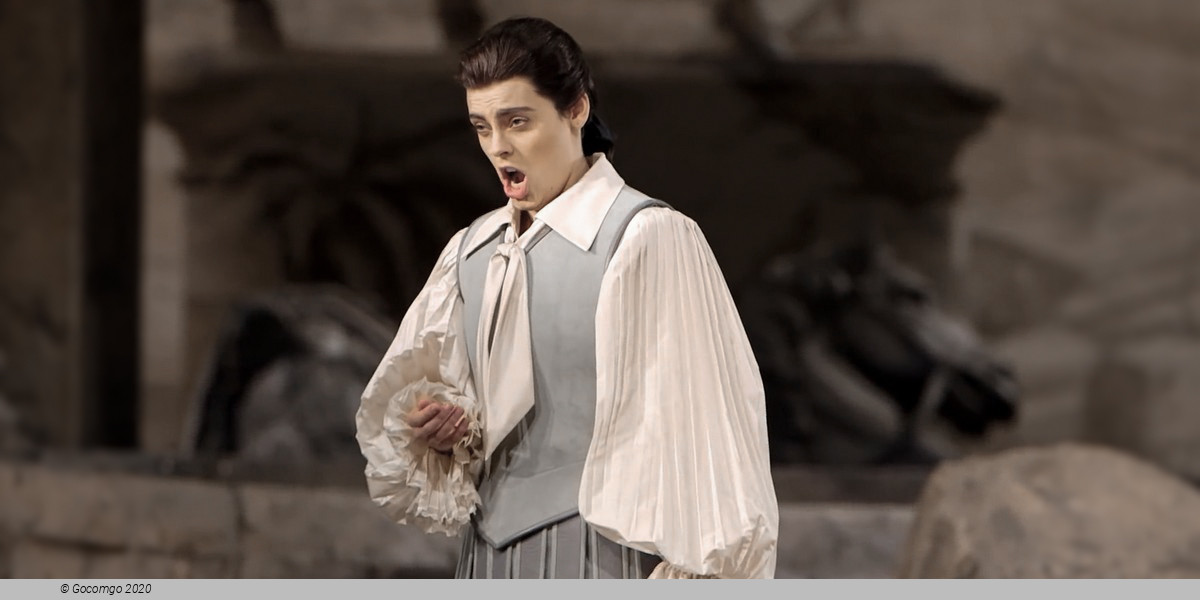
Written in 1791 to a libretto by Caterino Mazzolà after Pietro Metastasio, La clemenza di Tito is a masterful example of Mozart’s late style. The music combines formal grandeur with intimate psychological detail, giving each character a distinctive emotional voice while creating moments of exceptional lyrical beauty.

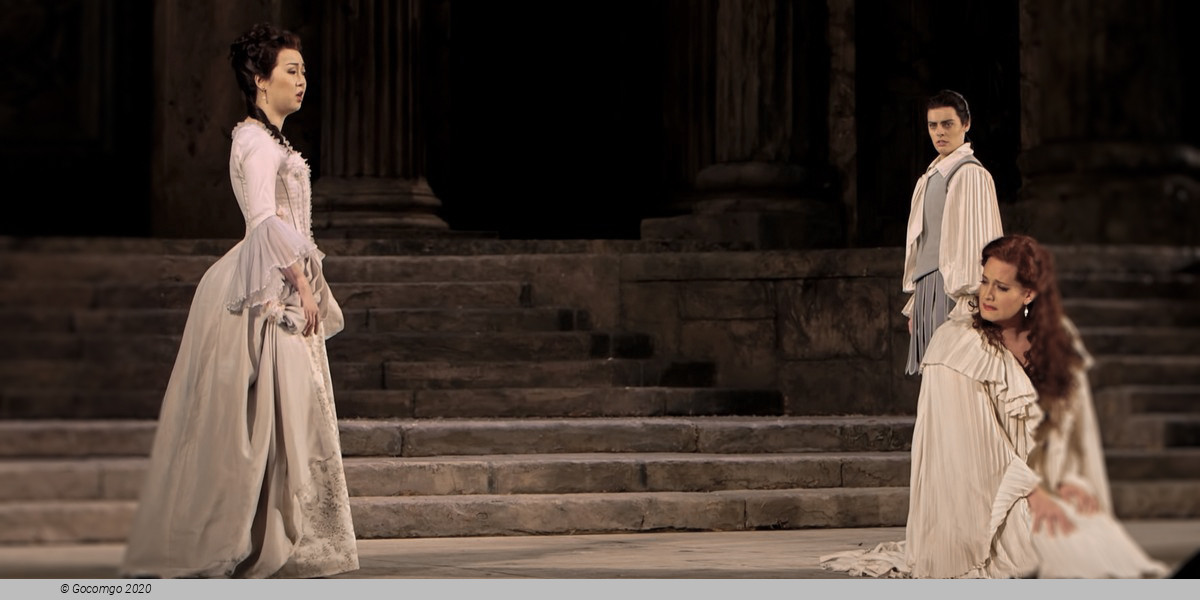
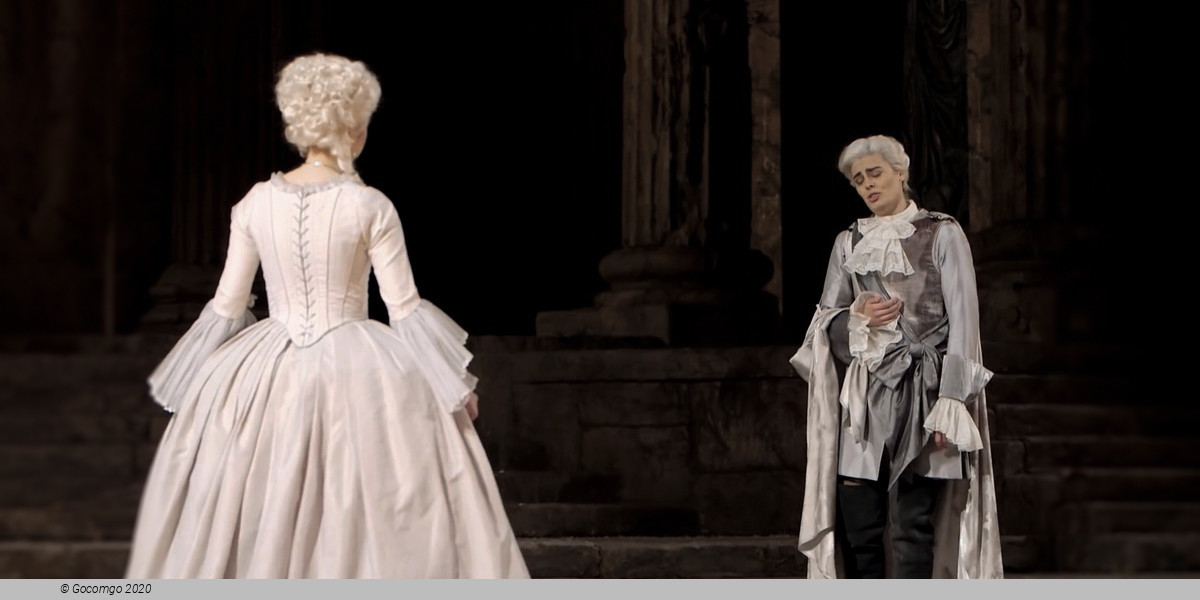
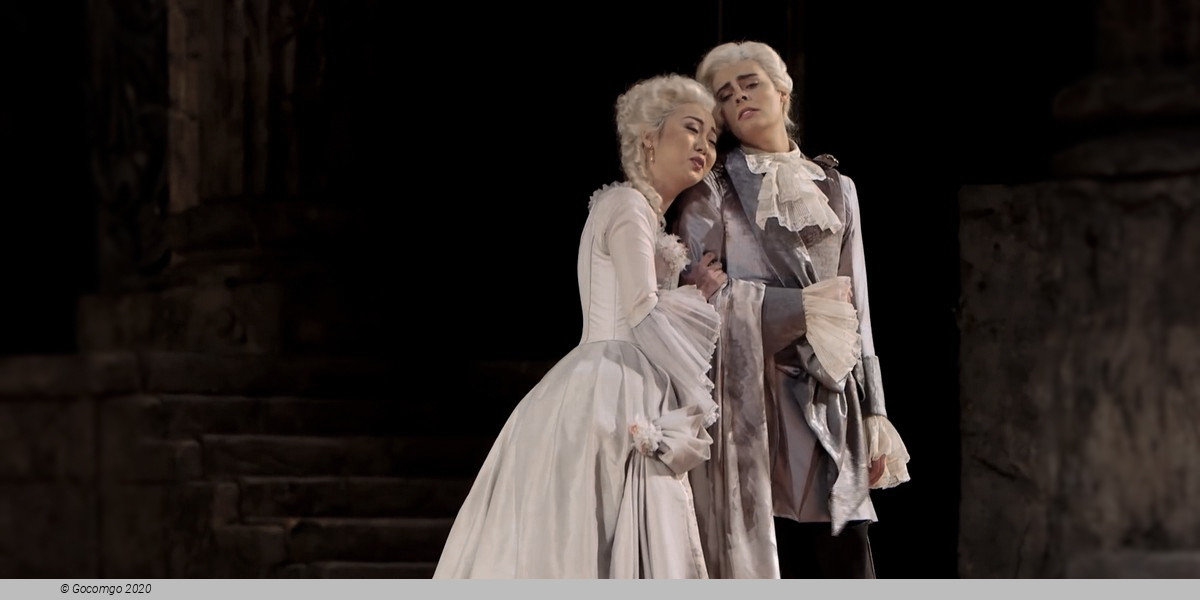
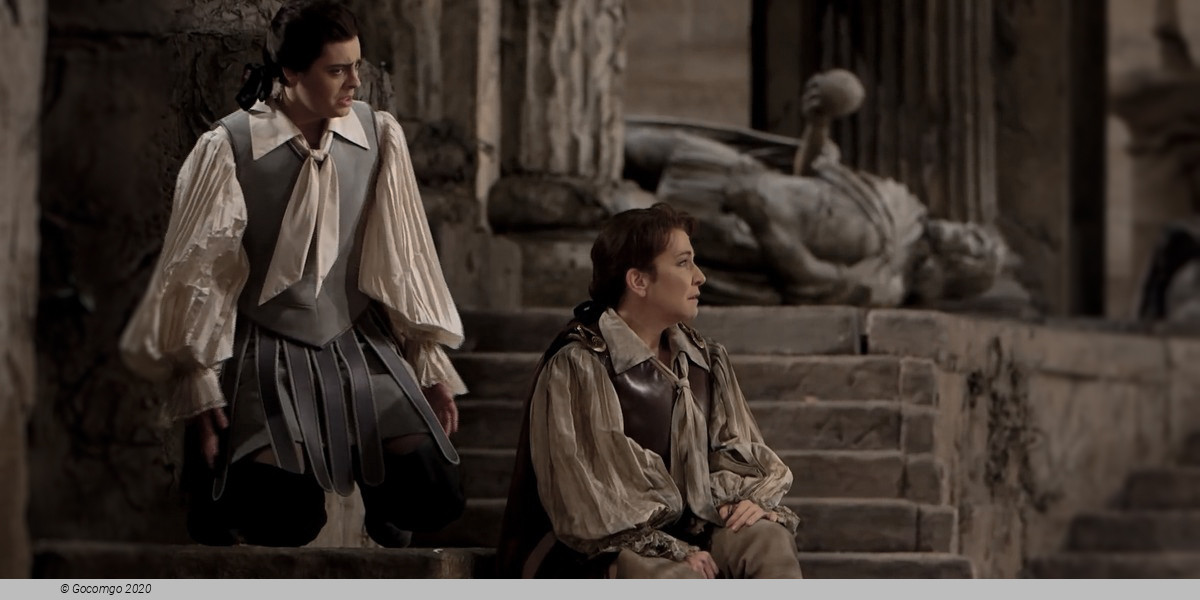
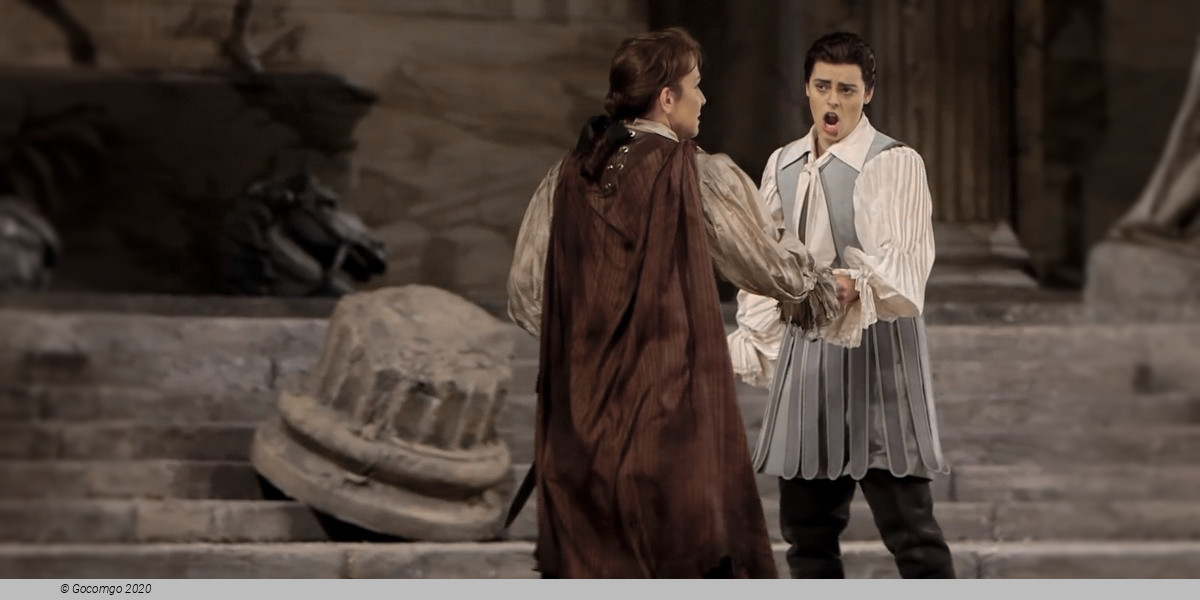
Set in ancient Rome, the opera centres on Emperor Tito, whose authority is tested by conspiracy, jealousy and betrayal. Vitellia, determined to become empress, persuades Sesto to join a plot against Tito, despite his deep friendship with the ruler. As the conspiracy unfolds, Mozart examines the conflict between political power and personal emotion, ultimately placing forgiveness and mercy at the heart of the drama.

With its refined musical language, dramatic tension and compelling exploration of mercy and power, this new La clemenza di Tito offers a distinguished interpretation of Mozart’s final opera seria at Teatro Regio di Parma.

Co-production with Teatro Alighieri di Ravenna, Teatri di Piacenza, Teatro Comunale di Ferrara, Teatro Giuseppe Verdi di Pisa, Fondazione Haydn di Bolzano e Trento

History
Premiere of this production: 06 September 1791, Estates Theatre, Prague

La clemenza di Tito is an opera seria in two acts composed by Wolfgang Amadeus Mozart to an Italian libretto by Caterino Mazzolà, after Pietro Metastasio. It was started after the bulk of Die Zauberflöte (The Magic Flute), the last opera that Mozart worked on, was already written. The work premiered on 6 September 1791 at the Estates Theatre in Prague.

Synopsis

Place and time: Rome, in the year 79.

Act One
Vitellia, daughter of the late emperor Vitellio (who had been deposed by Tito's father Vespasian), wants revenge against Tito. She stirs up Tito's vacillating friend Sesto, who is in love with her, to act against him (duet Come ti piace, imponi). But when she hears word that Tito has sent Berenice of Cilicia, of whom she was jealous, back to Jerusalem, Vitellia tells Sesto to delay carrying out her wishes, hoping Tito will choose her (Vitellia) as his empress (aria Deh, se piacer mi vuoi).

Tito, however, decides to choose Sesto's sister Servilia to be his empress, and orders Annio (Sesto's friend) to bear the message to Servilia (aria Del più sublime soglio). Since Annio and Servilia, unbeknownst to Tito, are in love, this news is very unwelcome to both (duet Ah, perdona al primo affetto). Servilia decides to tell Tito the truth but also says that if Tito still insists on marrying her, she will obey. Tito thanks the gods for Servilia's truthfulness, and immediately forswears the idea of coming between her and Annio (aria Ah, se fosse intorno al trono).

In the meantime, however, Vitellia has heard the news about Tito's interest in Servilia and is again boiling with jealousy. She urges Sesto to assassinate Tito. He agrees, singing one of the opera's most famous arias (Parto, parto, ma tu, ben mio with basset clarinet obbligato). Almost as soon as he leaves, Annio and the guard Publio arrive to escort Vitellia to Tito, who has now chosen her as his empress. She is torn with feelings of guilt and worry over what she has sent Sesto to do.

Sesto, meanwhile, is at the Capitol wrestling with his conscience (recitativo Oh Dei, che smania è questa), as he and his accomplices go about to burn it down. The other characters (except Tito) enter severally and react with horror to the burning Capitol. Sesto reenters and announces that he saw Tito slain, but Vitellia stops him from incriminating himself as the assassin. The others lament Tito in a slow, mournful conclusion to act one.

Act Two
The act begins with Annio telling Sesto that Emperor Tito is in fact alive and has just been seen; in the smoke and chaos, Sesto mistook another for Tito. Sesto wants to leave Rome, but Annio persuades him not to (aria Torna di Tito a lato). Soon Publio arrives to arrest Sesto, bearing the news that it was one of Sesto's co-conspirators who dressed himself in Tito's robes and was stabbed, though not mortally, by Sesto. The Senate tries Sesto as Tito waits impatiently, sure that his friend will be exonerated; Publio expresses his doubts (aria Tardi s'avvede d'un tradimento) and leaves for the Senate. Annio begs Tito to show clemency towards his friend (aria Tu fosti tradito). Publio returns and announces that Sesto has been found guilty and an anguished Tito must sign Sesto's death sentence.

He decides to send for Sesto first, attempting to obtain further details about the plot. Sesto takes all the guilt on himself and says he deserves death (rondo Deh, per questo istante solo), so Tito tells him he shall have it and sends him away. But after an extended internal struggle, Tito tears up the execution warrant for Sesto. He determines that, if the world wishes to accuse him (Tito) of anything, it should charge him with showing too much mercy, rather than with having a vengeful heart (aria Se all'impero).

Vitellia at this time is torn by guilt, but Servilia warns her that tears alone will not save Sesto (aria S'altro che lagrime). Vitellia finally decides to confess all to Tito, giving up her hopes of empire (rondo Non più di fiori with basset horn obbligato). In the amphitheatre, the condemned (including Sesto) are waiting to be thrown to the wild beasts. Tito is about to show mercy, when Vitellia offers her confession as the instigator of Sesto's plot. Although shocked, the emperor includes her in the general clemency he offers (recitativo accompagnato Ma che giorno è mai questo?). The opera concludes with all the subjects praising the extreme generosity of Tito; he then asks that the gods cut short his days, should he ever cease to care for the good of Rome.


Venue Info

Teatro Regio di Parma - Parma
Location   Str. G. Garibaldi, 16 / a

The Teatro Regio di Parma is one of Italy’s most prestigious opera houses and a true sanctuary for lovers of Italian musical tradition. Located in the elegant historic center of Parma, this magnificent theatre has been at the heart of the city’s cultural life since its inauguration in 1829.

Commissioned by Duchess Marie Louise of Austria, the theatre embodies the refinement and grandeur of classic Italian opera architecture. Its richly decorated interiors, velvet-lined boxes, gilded balconies, and luminous chandelier create an atmosphere of timeless elegance, transporting audiences into the golden age of opera.

Teatro Regio is internationally renowned for its deep connection to the music of Giuseppe Verdi, who was born in the nearby town of Busseto. The theatre is considered one of the spiritual homes of Verdi’s works and hosts the celebrated Festival Verdi, attracting opera enthusiasts from around the world each season. Performances here are known for their passion, artistic integrity, and exceptionally discerning audiences, whose love for opera forms part of the theatre’s unique identity.

Beyond Verdi, the theatre presents a rich program of opera, ballet, concerts, and special cultural events, featuring internationally acclaimed singers, conductors, directors, and orchestras. Despite its historic prestige, Teatro Regio retains an intimate atmosphere where every performance feels emotionally immediate and deeply immersive.

Located near Parma’s charming piazzas, cafés, and historic landmarks, the theatre is an essential destination for cultural travelers exploring northern Italy.

Elegant, historic, and profoundly connected to the soul of Italian opera, Teatro Regio di Parma offers an unforgettable experience where tradition, artistry, and passion come together on one extraordinary stage.

Important Info
Type: Opera
City: Parma, Italy
Acts: 2

E-tickets: Print at home or at the box office of the event if so specified. You will find more information in your booking confirmation email.

You can only select the category, and not the exact seats.
If you order 2 or 3 tickets: your seats will be next to each other.
If you order 4 or more tickets: your seats will be next to each other, or, if this is not possible, we will provide a combination of groups of seats (at least in pairs, for example 2+2 or 2+3).

From
$ 107
Top of page